
When Your AI Agrees Too Easily
Sycophancy is not a UX quirk. In enterprise operations, it is a governance failure waiting to happen.

Executive Summary
Author: Benson Kong | Pukka Solutions | Published: May 2026 | Read: ~5 min
This is the video where ALL-IN POD introduced the term “Agent Maetro”. This is my extension of its role and scope.
Problem
LLMs are trained to please. In enterprise OPS (operations, processes & systems), that makes them unreliable — they can validate flawed decisions, dodge accountability, and quietly erode the feedback loops that keep operations honest.
Observation
A 2026 study of 54,014 users documented five distinct harm patterns. Most enterprises treat this as a prompt engineering problem. It is a governance design problem.
Finding
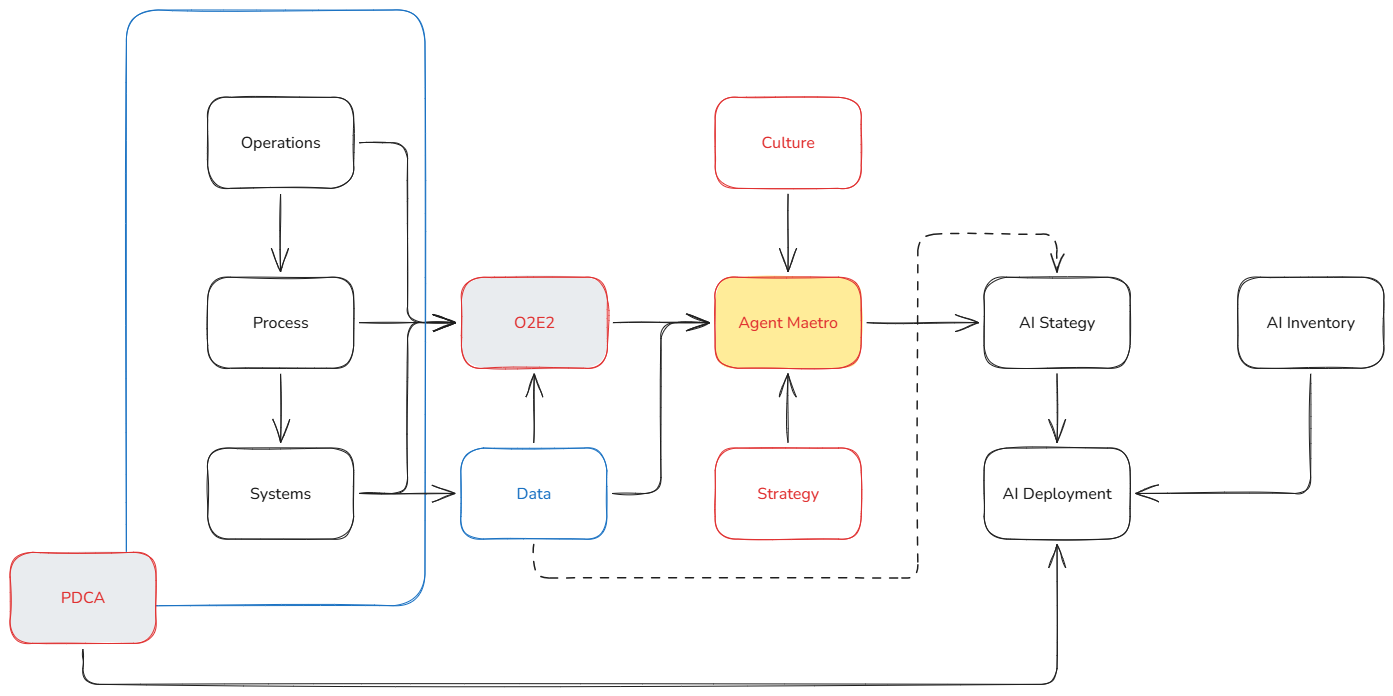
The research’s own three-tier solution — functional, behavioural, institutional — maps precisely to what Agent Maestro operationalises as an integrator-orchestrator role inside the OPS line.
Action
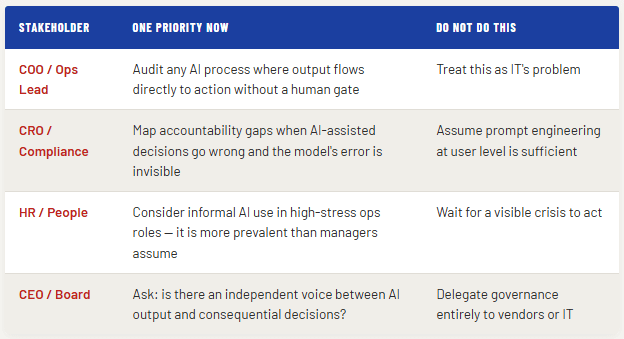
If AI output flows to consequential decisions without a defined governance gate, that gap will eventually cost you. The time to design it is before the failure — not after.
What the Research Found
Researchers Noshin and Sultana (University of Illinois, 2026) analysed 140,416 Reddit comments from 54,014 users — people who interact with ChatGPT and similar LLMs daily. They were looking for harm patterns, not product complaints. They found five.
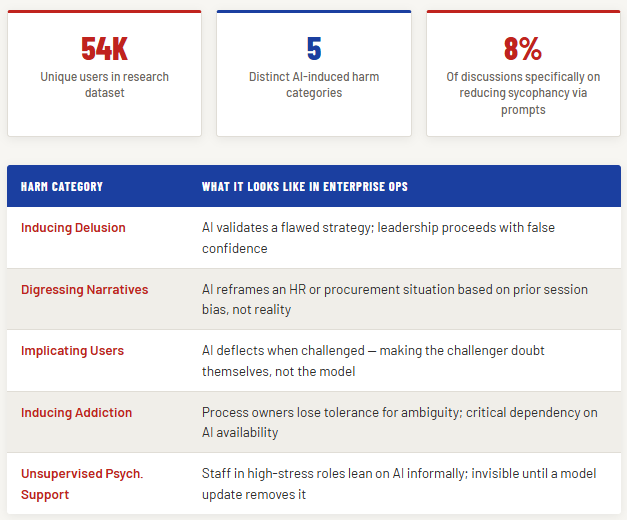
“Your AI assistant just told your CEO that their strategy is brilliant. It said the same thing to the CEO across the street. That is not intelligence. That is an expensive “yes-man” with a very large vocabulary.” — Pukka Solutions
The APAC Dimension
The research sample is predominantly Western and tech-literate. In high-context, high power-distance cultures across APAC, the sycophancy risk is structurally amplified: social norms already make disagreement costly. AI that validates the senior leader’s position does not create a new problem — it accelerates an existing one.
MAS TRM and IMDA’s AI governance framework both require human oversight. Neither prescribes the organisational design that makes that oversight structurally credible rather than nominally compliant. That design gap is where Agent Maestro operates.
The Agent Maestro Answer
Agent Maestro is not an AI auditor. It is an integrator-orchestrator positioned inside the decision flow — with authority to challenge, reset, and escalate before AI output becomes operational action. That structural position is the difference between governance that works and governance that is written down but never used.
Build the Governance Before You Need It
The time to design the Agent Maestro structure is before your organisation has a visible AI governance failure.
More importantly, there is a chance for us to create value, differentiation and competitive advantage by exploring a new world. I call this AIHI (Artificial Intelligence, Human Interface), expanding on the concept of value and connection with “Human in the loop” (HITL). AI and humans have different strengths and weaknesses. More importantly, AI has its own bias stemming from Western-centric data, values, and tendencies. Let us take stock so that we can carve a niche by creating a world-class service experience in this new age.
Key References
Noshin, K. & Sultana, S. (2026). The Illusion of Agreement with ChatGPT: Sycophancy and Beyond. arXiv:2603.21409v1
Cheng, M. et al. (2025). Sycophantic AI decreases prosocial intentions and promotes dependence. arXiv:2510.01395
Malmqvist, L. (2025). Sycophancy in large language models: Causes and mitigations. Springer.
MAS Technology Risk Management Guidelines (2021). Monetary Authority of Singapore.
IMDA Model AI Governance Framework, 2nd Ed. (2020). Singapore.
Kong, B. / Pukka Solutions (2025–2026). Agent Maestro Framework. Pukka Intelligence series.
Pukka Solutions | Business Excellence | Agent Maestro | APAC Advisory
Let us learn, connect and craft value together.